
Indonesia Central is Microsoft’s first cloud data center region in Indonesia. It powers cloud computing, AI workloads, and digital services that support businesses, public services, and everyday digital experiences across the country.
For many Indonesians, the cloud feels invisible. It powers everyday activities. These include messaging, digital payments, virtual meetings, file storage, and AI applications. These experiences feel instant and effortless. But they rely on a complex physical infrastructure behind the scenes.
At the heart of this ecosystem is Indonesia Central, which recently marked its first year of operation. Over the past year, it has played an important role in helping organizations adopt cloud technologies, strengthen digital resilience, and build AI-driven solutions closer to users and businesses.
Inside the Infrastructure Powering Indonesia's Digital Economy
Behind its modest exterior lies a highly sophisticated environment designed to support cloud and AI operations around the clock.
Inside the Indonesia Central Data Center, rows of server racks house thousands of processors working continuously to store information, process requests, and power digital services used by organizations across Indonesia. Indicator lights blink steadily throughout the facility, reflecting the constant flow of data that supports business operations, public services, and AI applications every day.
What stands out most, however, is not only the hardware itself but the environment built around it. Modern cloud and AI workloads rely on powerful CPUs and GPUs that generate significant amounts of heat while operating. Without effective cooling systems, equipment performance and reliability could be compromised.
As AI adoption accelerates, managing thermal output has become one of the most important considerations in datacenter operations.
Cooling Technologies Supporting the Next Generation of AI
To support increasingly demanding AI workloads, advanced cooling technologies have become an essential component of modern datacenter infrastructure.
Indonesia Central incorporates direct-to-chip liquid cooling technology, allowing heat to be removed more efficiently from high-performance processors while supporting improved operational efficiency.
According to Alistair Speirs, General Manager for Azure Infrastructure at Microsoft, liquid cooling is often misunderstood in terms of water consumption.
"The common assumption is that liquid cooling uses more water than air cooling, but the opposite is true. Air cooling relies on evaporation to dissipate heat, and that evaporation consumes water continuously. Liquid cooling, by contrast, operates as a closed loop with no evaporation. The same water circulates through the system for up to seven years without needing to be replaced."
As AI computing requirements continue to grow, efficient cooling solutions will play an increasingly important role in balancing performance, sustainability, and operational reliability.
Microsoft has also shared that its next-generation datacenter designs are being developed to operate without water-based cooling consumption through advanced chip-level cooling technologies that eliminate the need for evaporative cooling.
Ensuring Reliability Through Resilient Power Infrastructure
Beyond cooling systems, uninterrupted power remains critical to datacenter performance.
Facilities such as Indonesia Central are designed with multiple layers of power redundancy to ensure continuous operations. If one power source experiences disruption, backup systems can immediately take over, helping maintain service availability for organizations that rely on cloud infrastructure every day.
Supporting this level of reliability requires long-term collaboration across the energy ecosystem.
In Indonesia, Microsoft has partnered with PLN through a 10-year agreement that supports the delivery of 200 MW of renewable energy into the national grid. This initiative reflects a broader commitment to supporting Indonesia’s energy transition while enabling the continued growth of digital infrastructure.
According to Noelle Walsh, President of Cloud Operations & Innovation at Microsoft:
"Partnering with PLN marks an important milestone in advancing sustainability commitments in Indonesia. The 10-year agreement will deliver 200 MW of solar power in the country. We're not only securing renewable energy for our operations but helping accelerate the country's transition to a cleaner grid while supporting Microsoft's goal to be carbon negative by 2030."
Indonesia Central is also supported by dedicated high-voltage infrastructure and backup systems that utilize lower-carbon alternatives such as biofuel, helping maintain operational resilience while reducing environmental impact.
Balancing Sustainability and Security in Modern Datacenters
Sustainability extends far beyond energy and cooling systems.
Microsoft reduces environmental impact across the datacenter lifecycle through several initiatives. These efforts include recycling wooden packaging materials into household furniture, repurposing concrete waste for community infrastructure projects, redirecting food waste from on-site operations to local farming initiatives, and sourcing materials locally to reduce transportation-related emissions.
The company also supports water resilience efforts through community programs that promote rainwater harvesting and sustainable water management practices.
At the same time, security remains a foundational aspect of cloud infrastructure.
Protection within the Indonesia Central Data Center is built across multiple layers, including physical safeguards, digital security systems, and operational procedures designed to protect both infrastructure and data. Access to facilities is tightly controlled, systems are continuously monitored, and strict protocols help ensure accountability throughout daily operations.
In today’s cloud and AI era, trust is essential. As a result, security is not simply a feature of digital infrastructure but a core requirement for every service organizations and communities rely upon.
Developing the Talent Behind Digital Infrastructure
While technology forms the foundation of cloud infrastructure, people remain at the center of its success.
Indonesia Central is supported by a team of 99 highly specialized professionals, including technicians, engineers, and operations experts who help ensure the facility operates reliably every day.
As demand for cloud, AI, and digital infrastructure continues to increase, workforce development has become increasingly important.
Programs such as the Nusantara Datacenter Academy (NDCA) help prepare future datacenter professionals through industry-aligned training, certification pathways, and practical learning experiences. These initiatives create opportunities for students and young professionals to develop the skills needed to thrive in an evolving technology landscape.
One example highlighted by Microsoft is Azka, an NDCA graduate who successfully entered Indonesia’s growing datacenter industry after completing workforce development training supported by Microsoft and its partners. His journey demonstrates how targeted skills development can create meaningful career opportunities within one of Indonesia’s fastest-growing industries.
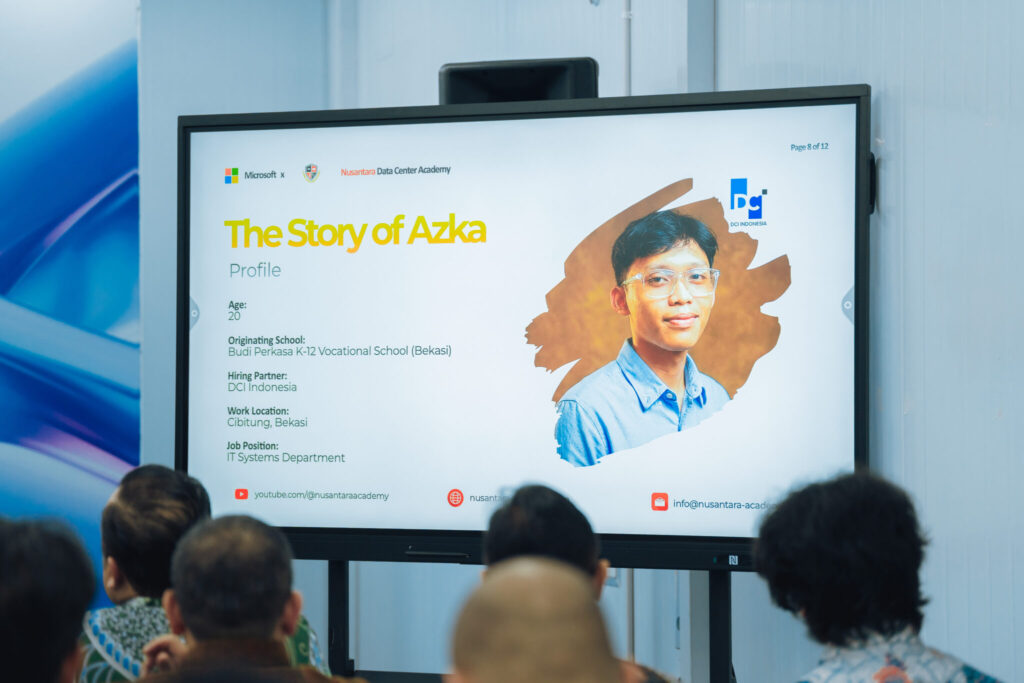
Image 3. Azka, a graduate of the Nusantara Datacenter Academy (NDCA), now works in Indonesia’s growing datacenter industry after completing workforce training supported by Microsoft and its partners. (Source: Microsoft)
Beyond NDCA, Microsoft continues to invest in broader digital skilling efforts through initiatives such as Microsoft Elevate, which aims to equip individuals with the capabilities needed to succeed in an increasingly AI-driven economy.
Dharma Simorangkir, President Director of Microsoft Indonesia, said datacenter operations need specialized expertise, including cybersecurity and AI skills. Ensuring that vocational education, certifications, and workforce development programs evolve alongside industry growth will be essential to sustaining Indonesia’s digital momentum.
How Cloud and AI Are Transforming Key Industries
The impact of Indonesia Central extends well beyond the datacenter itself.
Organizations across financial services, healthcare, telecommunications, education, and energy are increasingly leveraging cloud and AI technologies to improve operations, enhance services, and accelerate innovation.
One example is BNI Finance, which migrated more than 200 terabytes of mission-critical data and over 100 application services to Microsoft Azure and the Indonesia Central region. The migration helped strengthen security controls while supporting local data residency requirements.
In the education sector, Universitas Terbuka is using Azure OpenAI Service to develop AI Tutor capabilities that support more than 100,000 students across over 500 classes. The initiative demonstrates how AI can help deliver more scalable and personalized learning experiences for learners across Indonesia.
These examples reflect a broader trend in which organizations are leveraging cloud and AI infrastructure to transform how they operate, innovate, and serve their communities.
Preparing for Indonesia's AI-Driven Future
Indonesia Central represents more than a datacenter region. It is part of a broader effort to strengthen Indonesia’s digital infrastructure and support the country’s growing AI economy.
As demand for cloud computing and AI continues to accelerate, future success will depend on balancing performance, sustainability, security, and workforce development. Infrastructure investment alone is not enough. Long-term growth also requires strong partnerships and a skilled workforce capable of supporting the next generation of innovation.
One year after its launch, Indonesia Central demonstrates how advanced infrastructure and talent development can work together to support Indonesia’s digital transformation and help build a stronger foundation for the AI era.
Contact Us for Training and Certification Information
As Indonesia’s cloud, AI, and datacenter ecosystem continues to expand, the demand for skilled digital infrastructure professionals is growing rapidly.
NDCA offers industry-aligned training and certification programs designed to equip learners with the technical knowledge and practical skills needed to succeed in the datacenter industry.
Contact the NDCA team to learn more about our training programs, certification pathways, upcoming schedules, and career development opportunities in the digital infrastructure sector.
For more information about certification programs:
http://wa.me/6285176950083


