
The Growing Demand for Speed-to-Market in Digital Infrastructure
The rapid rise of artificial intelligence (AI) and cloud computing is reshaping how digital infrastructure is designed and delivered. For operators of mission-critical facilities such as data centers, the traditional timeline of planning and constructing infrastructure over several years is no longer practical. Today, new power capacity must be brought online within months to keep pace with accelerating market demand.
As a result, speed-to-market has become a critical competitive advantage. The faster a facility becomes operational, the sooner operators can capture revenue opportunities and meet customer requirements.
However, conventional stick-built construction methods are increasingly struggling to meet these expectations. On-site assembly of electrical infrastructure is often vulnerable to delays caused by weather conditions, labor shortages, complex vendor coordination, and supply chain disruptions.
These delays carry significant financial consequences. Every day a facility remains offline represents lost revenue potential while capital expenditures continue to accumulate. In an environment where demand frequently exceeds available capacity, construction speed has become a key performance indicator for digital infrastructure providers.
Modular Electrical Architecture Versus Conventional Systems
To overcome these challenges, many operators are turning to prefabricated modular electrical architectures. Compared to conventional construction methods, modular systems offer faster deployment, greater standardization, and improved scalability.
Prefabricated Plug-and-Play Design
A modular approach shifts much of the construction process from the project site to a controlled manufacturing environment. Critical components such as transformers, switchgear, and Uninterruptible Power Supply (UPS) systems are pre-integrated into steel skids or containerized modules before being shipped to the site.
Because manufacturing takes place in a factory-controlled environment, installation quality can be maintained more consistently. Human error is reduced, cable management is standardized, and external variables such as weather conditions have minimal impact on project schedules.
Once delivered, these modules require only limited utility connections before becoming operational. This plug-and-play approach significantly reduces installation time compared to traditional field-built systems.
Scalability Through a Pay-As-You-Grow Model
Traditional facilities often require operators to invest in full electrical capacity from day one, even when future demand remains uncertain. This practice frequently results in over-provisioning and underutilized infrastructure.
Modular electrical systems address this challenge through a Pay-As-You-Grow strategy. Operators can deploy only the capacity required initially and add additional power modules as demand increases.
This approach reduces upfront capital expenditures while enabling seamless expansion. Additional modules can often be installed without interrupting ongoing operations, making modular infrastructure particularly attractive for mission-critical environments where downtime is unacceptable.
Reducing Commissioning Time Through Pre-Commissioning
Testing and commissioning are among the most complex and time-consuming phases of any data center project. Modular architecture streamlines this process by shifting much of the testing effort to the factory before shipment.
Prior to delivery, vendors perform comprehensive Factory Acceptance Testing (FAT) on fully integrated systems. Because components are assembled and tested as a complete solution, system logic, control functions, and power management platforms such as SCADA can be validated before arriving on-site.
As a result, Site Acceptance Testing (SAT) and commissioning activities can be significantly reduced. This minimizes installation errors, reduces rework, and accelerates the path to operational readiness.
Risk Management, Operational Reliability, and Safety Compliance
While rapid deployment is often associated with reduced quality, modular infrastructure demonstrates the opposite. Standardization and factory-based assembly frequently improve reliability and operational resilience.
One major advantage is fault isolation. Modern modular architectures utilize distributed redundancy, allowing faulty modules to be isolated automatically while critical loads are transferred to redundant systems without disrupting operations.
Maintenance is also simplified through hot-swappable components. Many modular UPS systems allow technicians to replace faulty modules without shutting down the entire electrical system.
From a safety perspective, this approach aligns with standards such as NFPA 70E and OSHA, which emphasize minimizing exposure to energized electrical equipment. Modern hot-swappable systems often include finger-safe IP20 protection and compartmentalized designs that reduce risks associated with electrical maintenance activities.
Together, these features help improve operational continuity while enhancing worker safety.
Financial Analysis: PUE and Total Cost of Ownership
The benefits of modular architecture extend beyond construction speed. They also influence long-term operational efficiency and overall project economics.
Understanding Power Usage Effectiveness (PUE)
Power Usage Effectiveness (PUE) remains one of the most widely used metrics for measuring data center energy efficiency.
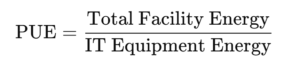
Lower PUE values indicate higher energy efficiency, as a larger proportion of the facility’s power is delivered directly to IT equipment rather than supporting infrastructure.
In conventional environments, over-provisioned UPS systems and transformers often operate at low utilization levels, sometimes below 30% load. Under these conditions, equipment efficiency declines and more energy is lost as heat.
This frequently results in average PUE values around 1.56.
By contrast, modular architectures allow operators to align installed capacity more closely with actual demand. Electrical systems can operate within their optimal efficiency range, typically between 60% and 80% utilization.
As a result, some modular facilities have achieved PUE values as low as 1.25, reducing energy waste and improving overall operational efficiency.
Impact on Total Cost of Ownership (TCO)
Improved PUE directly translates into lower operating expenses. For a 5 MW facility, reducing PUE from 1.56 to 1.25 can generate substantial energy cost savings over the facility’s lifecycle.
Additionally, the Pay-As-You-Grow model reduces upfront capital requirements by eliminating the need to purchase unused capacity in advance.
Together, lower CapEx and OpEx contribute to a more attractive Total Cost of Ownership (TCO) and a shorter payback period.
Industry Examples of Modular Infrastructure Deployment
Several global digital infrastructure companies have adopted modular approaches to accelerate deployment timelines and support growing capacity demands. The examples below are provided for educational and industry reference purposes only.
AI-Ready Infrastructure with Vertiv and Compass Datacenters
The growth of AI workloads is creating unprecedented power density requirements within modern data centers. Supporting these workloads often requires significantly higher rack densities than traditional facilities were designed to accommodate.
To address this challenge, Vertiv and Compass Datacenters have collaborated on modular infrastructure solutions that integrate power and whitespace systems into standardized deployment models. These solutions utilize large-scale UPS platforms capable of responding rapidly to the power fluctuations associated with AI computing environments.
By reducing on-site integration work and shifting more assembly activities to controlled manufacturing environments, the approach helps accelerate deployment schedules while supporting rack densities of up to 100 kW per rack.
Accelerating Deployment Through Schneider Electric's Prefabricated Approach
As global demand for data center capacity continues to grow, many operators face increasing pressure to deliver new facilities faster than conventional construction methods allow.
Schneider Electric’s Prefabricated Modular Data Center approach addresses this challenge by relocating the assembly of critical electrical infrastructure, including transformers, switchgear, and UPS systems, into a factory-controlled environment.
Because modules undergo Factory Acceptance Testing before shipment, commissioning activities can be completed more efficiently on-site. Across multiple deployments, this approach has demonstrated the ability to reduce total construction timelines by more than 40% compared to traditional brick-and-mortar construction methods.
Speed-to-Market Starts with Infrastructure Choice
Evaluation Criteria | Conventional Stick-Built Approach | Modular Electrical Architecture |
Capital Expenditure (CapEx) | High upfront investment | Flexible Pay-As-You-Grow model |
Construction Timeline | 12–24 months | 3–6 months |
Testing Methodology | Primarily on-site testing | Extensive factory testing (FAT) |
Typical PUE Performance | Approximately 1.56 | As low as 1.25 |
Scalability | May require downtime during expansion | Supports zero-downtime expansion |
Construction Risk | Higher dependence on site conditions | Reduced through prefabrication |
Speed-to-Market | Relatively slower | Up to 40% faster |
Conclusion: Standardization as a Competitive Advantage
Modular electrical architecture has evolved from an alternative construction method into a strategic requirement for modern mission-critical infrastructure. As AI, cloud computing, and digital services continue to drive unprecedented demand for computing capacity, operators need infrastructure solutions that can be deployed faster, scale efficiently, and maintain high levels of reliability.
By reducing construction timelines, enabling phased capacity growth, improving energy efficiency, and supporting operational resilience, modular electrical systems provide a practical path toward future-ready infrastructure.
For operators seeking to remain competitive in an increasingly demanding market, standardization and modularity are becoming essential foundations for long-term success.


