
Indonesia’s data center industry is at a pivotal moment. Fueled by the rapid digital economy ranging from e-commerce transactions and cloud services to digital security the demand for reliable and efficient data storage and processing infrastructure is surging. Yet, behind this tremendous opportunity lies a fundamental challenge: the availability of competent human resources (HR) capable of supporting and sustaining this sector’s growth.
A recent industry podcast explored this issue in depth, highlighting the urgent need for structured training, certification, and multi-stakeholder collaboration to close the widening talent gap.
The Talent Gap: A Persistent Challenge
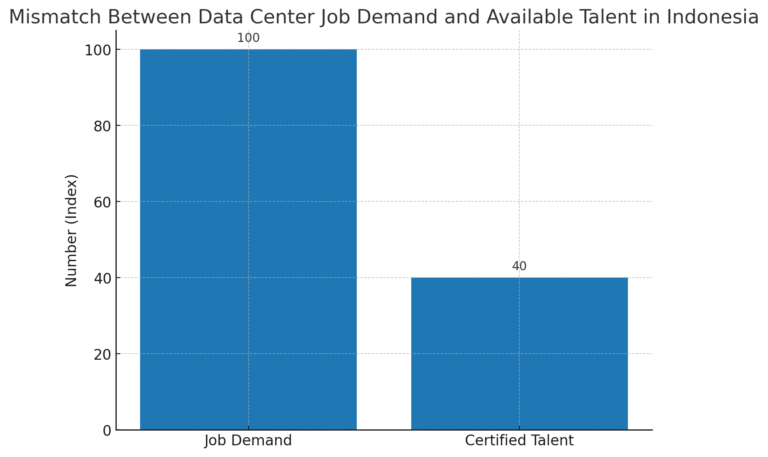
While the demand for data center professionals continues to rise, the supply of truly qualified talent remains limited. Many current employees are what the speakers describe as “accidental professionals”—individuals who entered the sector by chance, often without formal education or sufficient preparation.
This situation creates a paradox:
- Employers demand professionals with prior data center experience.
- At the same time, opportunities to gain such experience are scarce.
As a result, although certifications exist, the lack of hands-on exposure widens the talent gap. This underscores the urgent need for structured internships, bridging programs, and training that connect academic theory with real-world operations.
Tapping into Critical Facility Experience
One practical solution raised during the discussion is to recruit professionals from critical facility sectors such as hospitals, airports, and military installations. These professionals already understand operational discipline, system uptime, and clean room environments—all of which are highly transferable to data center operations.
With the right certification and supplemental training, this workforce could become a valuable source of talent to help meet growing industry needs.
Recruitment in Niche Communities, Not Job Portals
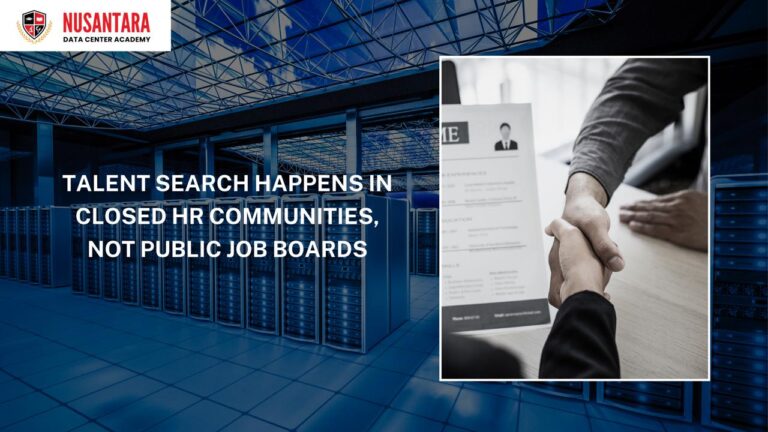
The podcast also revealed that traditional recruitment methods such as public job boards or LinkedIn postings are often ineffective for mid- to senior-level positions.
Instead, experienced data center professionals are usually recruited through closed HR communities on platforms like WhatsApp or Telegram. These networks rely heavily on recommendations, referrals, and trust within tight-knit industry circles. This insight suggests that companies must go beyond public postings and invest in relationship-building, community engagement, and networking strategies to secure the right talent.
Certification, Digital Literacy, and Lifelong Learning
Certification remains a vital tool for standardizing competencies in the data center workforce. However, certification alone is not enough without real operational experience.
Government initiatives, such as Kominfo’s digital literacy program, can be adapted into “data center literacy” programs, raising baseline awareness among students and young professionals. Such initiatives could accelerate the development of a competent workforce, particularly if scaled in collaboration with universities and professional associations.
Equally important is the mindset of continuous learning. Success in this sector requires combining formal education with informal self-study, online courses, and the use of emerging tools like AI (e.g., ChatGPT) for research and skill development. Professionals who are curious, proactive, and committed to lifelong learning are more likely to thrive in this rapidly evolving industry.
Risks of Ignoring the Talent Gap
If the workforce shortage remains unresolved, Indonesia’s data center industry faces several risks:
- Wage inflation, as companies compete for scarce talent.
- Rising operational costs without proportional improvements in quality.
- Service inefficiencies, which could harm competitiveness in the regional market.
This scenario has occurred in other tech sectors where demand surged without adequate preparation of the talent pipeline. To avoid repeating these mistakes, a long-term talent strategy is essential.
Collaboration: The Key to Sustainable Growth
The podcast emphasized that sustainable talent development requires a collaborative ecosystem involving:
- Government, as a regulator and enabler of certification frameworks and literacy initiatives.
- Universities, to provide relevant curricula, internships, and applied research.
- Professional associations, such as HAEI and PII, to certify informal learning and establish industry standards.
- Industry players, to create talent pools through academies, partnerships, and community-building.
This multi-stakeholder approach ensures that professionals are not only certified but also competent and ready to perform in real-world environments.
Optimism: A Growing Market with Long-Term Potential
Despite these challenges, the outlook for Indonesia’s data center industry remains highly positive. Internet traffic continues to climb, digital platforms remain integral post pandemic, and enterprise cloud adoption is expanding. These trends guarantee sustained demand for data center services making talent development more urgent than ever.
Advice for the Next Generation
For young professionals looking to build a career in this sector, three key messages stand out:
- Commit to continuous learning – combine academic knowledge with independent exploration of new technologies.
- Pursue relevant certifications – they are both a gateway and a proof of commitment to the profession.
- Cultivate passion and perseverance – curiosity and persistence are essential in navigating the challenges of this dynamic field.
By adopting this mindset, newcomers can transform what might begin as an “accidental career” into a purposeful and rewarding professional journey.
Conclusion
This podcast paints a clear picture: building a robust workforce for Indonesia’s data center industry is not just a technical necessity but a strategic imperative. Certifications, structured training, and lifelong learning are essential, but the broader solution lies in collaboration among government, academia, associations, and industry players.
With a well-planned approach, Indonesia can bridge its talent gap, sustain growth, and establish itself as a leading player in the regional data center ecosystem.


