
The rapid growth of digital infrastructure in Indonesia has fueled the rising demand for efficient, reliable, and sustainable data centers. One of the most critical aspects of data center management is the cooling system. Cooling is no longer seen merely as keeping equipment cold, but rather as a comprehensive strategy to ensure service reliability, reduce energy consumption, and support environmental sustainability.
The podcast “Do Data Centers Really Need to Be Extremely Cold and Precise? It’s Just a Myth—Find Out the Facts Here” produced by the Nusantara Data Center Academy discusses the paradigm shift in data center cooling, debunks outdated myths, and provides strategic guidance for operators and businesses in Indonesia. This episode is hosted by Sari Oktaviani with two prominent figures in the data center cooling industry:
- Herlin Haryani, President of ASHRAE Indonesia Chapter, who shares insights on technical innovations, real-time monitoring, and energy-efficient cooling strategies.
- Indri Priscillia, Managing Director of PT Tools Air Teknologi Indonesia, who discusses customization, personnel certification, and the importance of local content (TKDN) in data center operations.
Outdated Myths of Data Center Cooling
A long-standing misconception is the belief that data centers must always be maintained at extremely cold conditions. This view originated from an era when servers could only operate within a narrow temperature range, where even a slight increase could cause disruption.
However, according to Herlin Herlianika, advancements in modern server technology have expanded these standards. Servers today can operate optimally within 19–27°C. This means data centers no longer need to maintain ultra-low temperatures, but instead ensure conditions remain within the tolerance range of the equipment. In other words, cooling should be focused on the machines, not on human comfort in the server room.
From Precision Cooling to Energy Efficiency
Precision cooling was once the top priority, as legacy IT equipment could only function within strict ranges of temperature and humidity. With greater flexibility today, the focus has shifted toward energy efficiency.
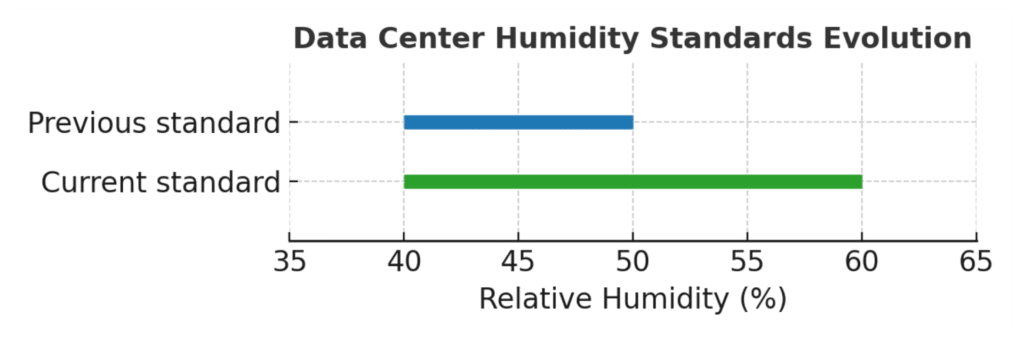
According to Indri Prisilia, humidity levels that were once tightly maintained at 40–50% can now be extended up to 60% without affecting server performance. What was once seen as the absolute need for precision cooling has now become secondary to efficiency.
This shift also applies to cooling load management. For instance, once the average room temperature is achieved, fans no longer need to run at full capacity. Reducing unnecessary fan startups—which consume significant energy—can save substantial energy when multiplied across multiple racks with dozens of servers.
Energy Efficiency as the Key Priority
Today, cooling is a major strategy for reducing energy consumption, not merely for maintaining stable temperatures. Given that cooling systems can account for up to 40% of a data center’s total energy use, optimization has a direct impact on reducing operational costs and meeting sustainability goals.

Herlin emphasized that adopting energy efficiency aligns with global trends in green data center management. Indonesia, which is experiencing surging data center demand, must seize this momentum by implementing energy-efficient cooling strategies early on.
Multi-Stakeholder Collaboration
Advances in cooling technology cannot be achieved by a single party alone. Cross-sector collaboration is essential:
- Associations: ASHRAE, IDPro, and others establish standards and provide education.
- Government: Supports regulations and certification schemes that encourage energy-efficient practices.
- Technology Providers: Deliver innovations and localized solutions tailored to market needs.
- Educational Institutions: Provide curricula on cooling technologies at both vocational and higher education levels.
Herlin highlighted the importance of this collaboration to ensure Indonesia is not left behind globally and can anticipate the surging demand for data centers.
Evolving Competencies of Data Center Engineers
The paradigm shift in cooling also impacts human resource requirements.
According to Indri, in the past, an engineer only needed mechanical skills such as welding, valve replacement, or component repair. Today, engineers must also understand software logic, control systems, and automation to optimize cooling efficiency.
A hybrid skill set—combining mechanical expertise with software logic—has become indispensable. The greatest challenge lies in retaining experienced talent, as the industry faces high turnover rates with engineers often moving to competitors.
Data Center Trends and Prospects in Indonesia
Digital consumption among Indonesians—from children to seniors—is rising through social media, e-commerce, and online entertainment. This drives exponential growth in data center demand.
According to Herlin, Indonesia holds enormous potential to become one of Southeast Asia’s leading data center hubs. However, this success relies heavily on the readiness of local talent, so that the industry does not remain dependent on foreign expertise.
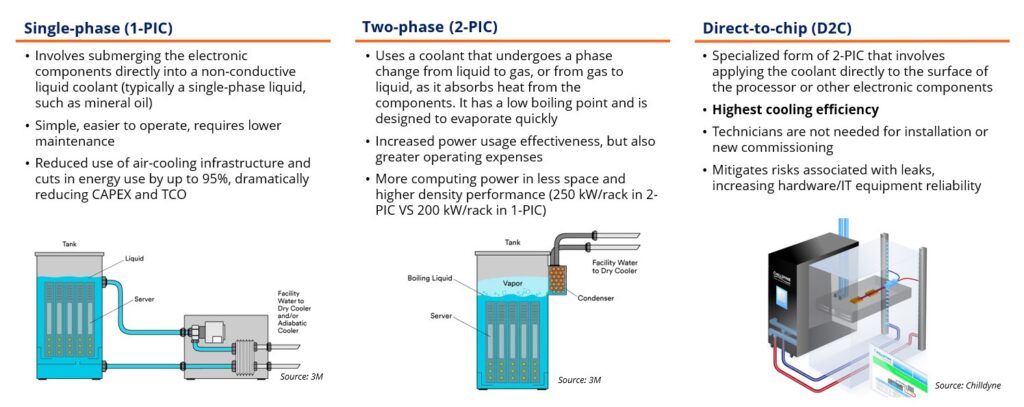
Source: Cleantech Group, Revolutionizing Data Center Cooling: Immersion Technologies at the Forefront
Immersion cooling is an increasingly relevant innovation to address Indonesia’s soaring data center needs. This technology immerses servers directly into a special dielectric fluid that absorbs heat with exceptional efficiency. Compared to conventional air-based cooling, immersion cooling provides higher energy efficiency, reduces space requirements, and extends equipment lifespan.
This technology reflects the future direction of Indonesia’s data centers, where operators must not only achieve efficiency but also sustainability, while being ready to adopt innovative solutions aligned with global trends.
Strategic Recommendations for Operators and Businesses
Key strategic takeaways from the discussion include:
- Focus on servers, not rooms – Cooling should target machines, not human comfort.
- Prioritize energy efficiency – Emphasize power consumption, not just precise temperature.
- Participate in certifications and associations – Such as ASHRAE, for updated standards and technology transfer.
- Engage professional consultants – Ensure cooling design matches the specific needs of each data center.
- Invest in human capital – Develop engineers with hybrid competencies in both mechanical and software logic.
Conclusion
The paradigm shift in data center cooling shows that maintaining ultra-low, precise temperatures is no longer the primary priority. The focus has moved toward energy efficiency, flexible ranges of temperature and humidity, and the development of human resources with more holistic skills.
Cross-sector collaboration between associations, government, technology providers, and educational institutions is crucial to building a resilient data center ecosystem in Indonesia.
With the potential for significant growth in demand, energy-efficient cooling strategies, strong collaboration, and the readiness of local talent will determine Indonesia’s success in building a sustainable and globally competitive digital infrastructure.
For more details, listen directly to the podcast on YouTube Nusantara Academy and don’t forget to register for training by contacting https://wa.me/6285176950083


