
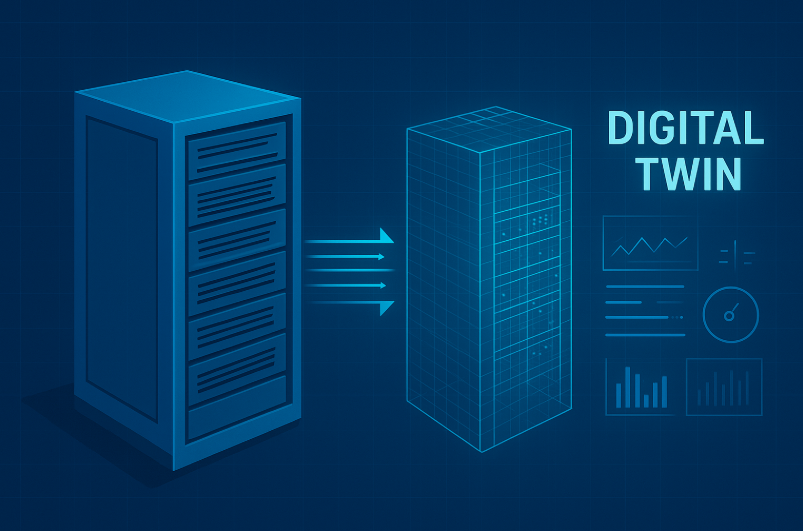
In the era of digital transformation, Digital Twin technology has become essential for optimizing performance and achieving sustainability in modern data centers. Digital Twin enables operators to simulate operational changes, predict failures, and maximize energy efficiency (PUE) before physical implementation.
How can the implementation of Digital Twin revolutionize data center operations, particularly in terms of sustainability and efficiency?
Tune in to this in-depth discussion on how this innovation is driving the future of efficient and sustainable data centers in the latest episode of Podcast Nusantara with:
- Dave King – Product Engineering Architect, Cadence Design System
- Widjojo Hardjoprakoso – Expert Associate & Knowledge Development Manager, Green Building Council Indonesia (GBCI)
Hosted by:
Mieke Pradipta – Technical Sales Manager, Corning Incorporated
Introduction to Digital Twin Technology in Data Centers
Digital twin technology is increasingly becoming a core pillar in managing modern data centers in Indonesia. With rising computational demands, especially due to AI workloads, operators need smarter ways to optimize energy, improve cooling efficiency, and ensure operational reliability.
A digital twin is a digital replica of a physical system that mirrors its real-time behavior, performance, and conditions. In data centers, this includes power systems, cooling infrastructure, UPS/gensets, airflow, and IT workloads. Digital twin technology allows operators to analyze, simulate, and predict facility performance before problems occur.
Key Concepts and How Digital Twins Work
What Is a Digital Twin?
Digital twins utilize sensors, data streams, and simulations to replicate real-world conditions. Research shows that digital twins not only provide a snapshot of current operations but also predict future scenarios, allowing operators to:
- Anticipate potential failures
- Optimize energy usage
- Implement predictive maintenance
- Extend asset lifespan
Autonomous Optimization and Controls
Digital twins can perform autonomous optimization, sending insights directly to control systems to adjust power or cooling automatically. While debates continue on whether these systems should be fully automated or human-supervised, the goal remains: minimized risk, maximized efficiency.
Digital Twin as Asset Management
Beyond monitoring, digital twins serve as asset lifecycle management platforms, evolving with physical systems. This reduces downtime, monitors component health, and predicts maintenance schedules.
Why Digital Twins Are Critical for Indonesian Data Centers
Industry Growth & Local + Regional Challenges
Indonesia and Southeast Asia (ASEAN) are fast-growing data center markets, driven by digital transformation, cloud adoption, and AI. Tropical climate, electricity supply, and high cooling demands are significant regional challenges.
Digital twins provide detailed insights into energy flows, cooling optimization, capacity management, and failure prediction, helping operators navigate these constraints effectively.
Power & Cooling Efficiency Management
Cooling consumes a major portion of energy in data centers. Recent studies indicate that digital twin–based cooling systems, such as integrated heat pipe cooling, can reduce energy consumption by up to 23.6% compared to conventional methods.
Global data centers, such as NTT facilities, achieved significant annual energy savings by optimizing temperature set-points, airflow, and operational parameters.
Predictive Maintenance for Reliability & Sustainability
By combining real-time data and digital models, digital twins enable preventive maintenance planning, early anomaly detection, and simulation of extreme load or temperature scenarios, ensuring uptime, extending asset life, and minimizing over-provisioning.
Building and Implementing Digital Twins
Workflow from Data Collection to Integration
Implementation involves collecting infrastructure data (IoT sensors), conducting site audits, building digital models, running operational simulations, and integrating with live systems.
BIM vs CFD vs Digital Twin
While BIM focuses on construction phases and CFD on airflow and heat transfer design, digital twins operate throughout the operational lifecycle, continuously updating real-world data for energy, cooling, and asset optimization.
Integration with Existing Systems
For optimal results, digital twins must integrate with existing management tools (BMS, DCIM, IT monitoring, IoT sensors), providing consistent data across engineering, operations, and management teams.
Strategic Benefits and ROI
Cost Savings and Capacity Utilization
Digital twins allow operators to maximize capacity without overspending, delaying or avoiding major expansions while reducing energy and maintenance costs.
Energy Efficiency vs Capacity Trade-offs
Digital twins help balance energy efficiency (lower consumption & PUE) with IT performance/capacity, ensuring no trade-off between operational efficiency and output.
Suitable for Hyperscale and Medium-Sized Data Centers
Initially adopted by large data centers, research shows digital twins benefit medium-sized or multi-tenant facilities, common in Indonesia and Southeast Asia.
Human, Market, and Sustainability Factors in APAC
- Energy-intensive data centers in APAC increasingly adopt renewable energy, cooling efficiency, and energy-saving technologies.
- ASEAN regulations and white papers (e.g., ASEAN Centre for Energy & Huawei) encourage “green” data centers, making digital twins a key strategy.
- Digital twin adoption + smart energy management helps tropical data centers withstand climate challenges and grid instability.
Environmental Impact & Global Sustainability
Data centers globally contribute significantly to electricity use and carbon emissions. Digital twins, combined with renewable energy integration, cooling optimization, and waste heat recovery, significantly reduce carbon footprint and energy consumption, supporting global sustainability goals.
Future Outlook
- With increasing AI and cloud workloads, efficiency technologies like digital twin, cooling optimization, renewable energy integration, and waste heat recovery are becoming essential.
- In ASEAN and Indonesia, combining digital twins with green energy regulations and efficient data center designs can create more sustainable digital infrastructure.
- Collaboration between governments, infrastructure providers, and IT industry is critical to align digital transformation with sustainability.
Summary
Applied correctly, digital twin technology combined with energy efficiency strategies and integrated infrastructure can be a game-changer for tropical data centers, like those in Indonesia. It helps reduce energy consumption, improve operational efficiency, increase capacity, minimize carbon footprint, and support global and regional sustainability goals.
For data center operators and stakeholders in Indonesia and Southeast Asia, it’s time to consider digital twins as a foundation for operational excellence. Start with audits, IoT sensor integration, and efficiency studies to make your data center faster, reliable, energy-efficient, and green.
For more details, listen directly to the podcast on YouTube Nusantara Academy and don’t forget to register for training by contacting https://wa.me/6285176950083


