
The data center industry is moving fast to keep up with the massive demand for digital infrastructure. No longer just about storing data, data centers are now expected to operate more efficiently, consume less energy, and meet high reliability standards. In a recent podcast discussion with industry practitioners, efficiency and reliability emerged as the key factors to ensure smooth operations while also supporting sustainability.
Nusantara Academy Podcast returned with this crucial topic: electricity as the core of the data center industry. In Season 1, Episode 9, host Sari Oktaviani spoke with three experienced experts in the field:
- Ir. Suminto Sosro Saputro, IPU – Senior Advisor at Indonesia Data Center Provider Organization (IDPRO), an electrical engineer with 42 years of experience, and a 2023 graduate of the professional engineering program (IPU) at Universitas Gadjah Mada.
- Ir. Sucipta Suandi – Founder and CEO of PT Vektor Daya Mekatrika, a UPS (Uninterruptible Power Supply) technology provider for data centers, with an electrical engineering background and professional certifications in the data center field.
- Agus Suhendar – Assistant Manager of Energy Transactions at PLN UP3 Serpong, with 16 years of experience at PLN, holding backgrounds in Electrical and Industrial Engineering.
From Power Plants to Server Racks: The Electricity Journey to Data Centers
The electrical system in data centers starts at the power plant, transmitted through high voltage (500 kV or 150 kV), then stepped down to medium voltage (20 kV) and finally to low voltage (220/380V).
Inside the data center, the flow involves:
- Transformers to step down voltage
- Automatic Transfer Switch (ATS) to select the power source
- UPS (Uninterruptible Power Supply) to bridge short outages
- Generators for long-term backup
- Distribution panels before electricity finally reaches the server racks
This means multiple layers of protection must be in place—since even the slightest downtime can have fatal consequences.
It was stated by Sucipta that a UPS can be compared to a seatbelt in a car: rarely used, but when an accident occurs, it becomes the main lifesaver. The same principle applies to data centers.
Understanding the Three Key Terms
- Power Quality
Relates to voltage stability, frequency, and waveform quality. Poor power quality (e.g., sag, swell, or harmonics) can damage equipment or cause inefficiencies. - Reliability
Measures how often and how long electrical systems experience disruptions. Top-tier data centers aim for up to 99.995% uptime (Tier 4), meaning downtime must not exceed 26.5 minutes per year. - Efficiency
Refers to how optimally power is used. For example, modern UPS systems can reach 95% efficiency, minimizing power losses and reducing operational costs.
Why It Matters So Much for Data Centers
Unlike malls or factories, data centers must run 24/7 nonstop. Even a one-second outage can lead to:
- Unplanned server shutdowns
- Long recovery times for online applications
- Higher operational costs due to repairs
- Loss of customer trust and reputation damage
It was emphasized by Agus Suhendar from PLN that maintaining continuity of supply is mandatory for PLN, but data center operators must also prepare their own backups. Collaboration between both parties was considered the key to ensuring truly always-on services.
That’s why data centers are often compared to airports or hospitals: there can be no compromise when it comes to power quality and reliability.
The Standards in Place
Some key industry references include:
- Voltage: +5% / –10%
- Frequency: ±1 Hz
- Total Harmonic Distortion (THD): <5%
- Uptime Tier 4: 99.995%
- UPS Efficiency: ≥95%
These are not just numbers but commitments to data security, user trust, and business continuity.
Global Trends: Balancing Reliability and Efficiency
Beyond reliability, energy efficiency is another pressing issue. According to the International Energy Agency (IEA, 2023), global data center energy consumption could account for up to 4% of the world’s electricity by 2030 if not properly managed.
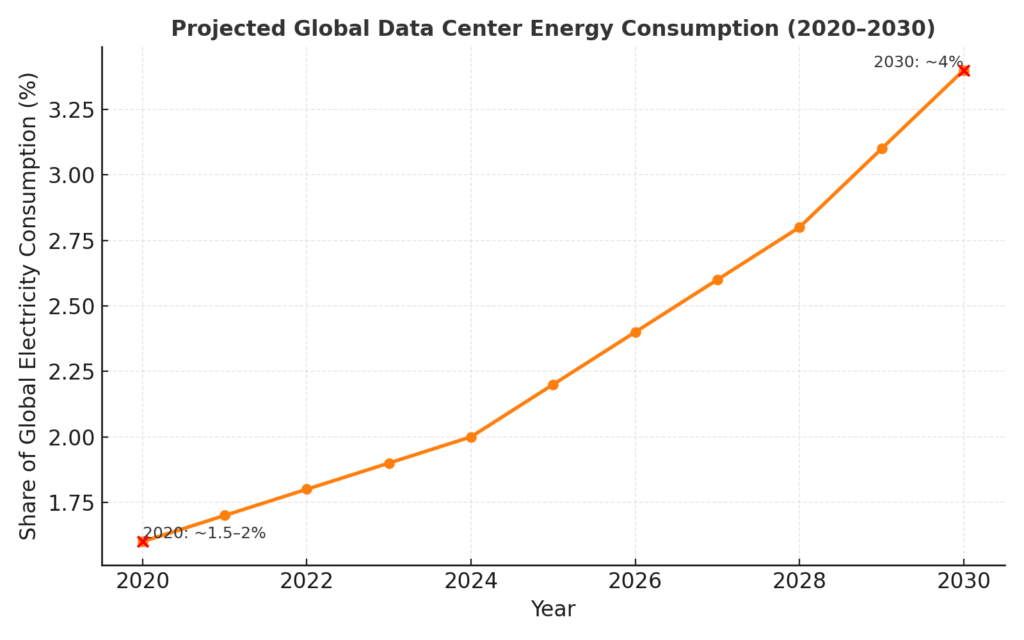
This is why operators are expected not only to build reliable systems but also greener and more efficient ones. Innovations such as high-efficiency UPS, smart grid integration, and renewable energy adoption are becoming unavoidable trends.
PLN & Data Center Operators: Complementing Each Other
While PLN ensures voltage and frequency meet standards, risks like storms, floods, and technical faults still exist. That’s where data center operators come in—by deploying UPS, generators, and redundancy systems to stay truly always on.
This collaboration is not just about uptime; it’s about building a trustworthy and globally competitive digital ecosystem.
Conclusion
The discussion made it clear: Power Quality, Reliability, & Efficiency are not just technical jargon but essential factors in sustaining digital services. A data center without reliable electricity is like a body without blood—it simply cannot survive.
It was concluded by Ir. Suminto that power is the foundation, and if the foundation is shaky, no matter how sophisticated the building, it will not stand for long.
For more details, listen directly to the podcast on YouTube Nusantara Academy and don’t forget to register for training by contacting https://wa.me/6285176950083


