
For years, air-based cooling systems such as conventional air conditioning have been the standard in server rooms. Cold air was circulated to maintain stable equipment temperatures, and this approach worked well as long as computing loads remained within traditional limits.
That situation is now changing rapidly.
The rise of large-scale Generative AI workloads has significantly increased the heat generated by modern servers, making conventional air cooling increasingly difficult to sustain. This is where liquid cooling data center technology is becoming a critical solution.
The expansion of AI is not only transforming how organizations process data, but also reshaping the physical infrastructure of data centers. AI servers rely on high-performance GPU clusters that consume substantial power and produce far more heat than traditional server hardware.
For operators, this is more than a technical adjustment. If heat is not managed properly, server performance can degrade, energy efficiency can drop, and the risk of hardware failure rises significantly. As a result, many operators are moving away from traditional air cooling and adopting liquid cooling data center systems.
The Limits of Air Cooling and the Rise of Liquid Cooling Data Center
To understand why this transition is happening, it helps to look at the physical limitations of conventional cooling systems.
From a thermodynamic perspective, air has a relatively low heat capacity compared to liquids. This means air-based systems such as CRAC and CRAH units are only effective up to a certain thermal load. In traditional facilities, these systems generally support racks with power densities around 10 to 20 kW.
AI infrastructure changes that scale entirely.
A single rack filled with AI GPUs can require 40 kW, 80 kW, or even more than 100 kW of power. In hyperscale facilities, these figures continue to rise as AI models become more complex.
If operators continue relying solely on air cooling for this level of density, they need much larger airflow volumes, stronger fans, more electricity, and significantly more physical space for cooling infrastructure.
In this context, liquid cooling data center technology is no longer an optional innovation. It is increasingly becoming a practical requirement for maintaining stable and efficient AI operations.
Two Main Technologies Behind Liquid Cooling Data Center
There are currently two major approaches used in liquid cooling data center environments.
Direct-to-Chip Cooling
Direct-to-Chip (DLC) cooling delivers coolant directly to the hottest components, typically CPUs and GPUs. Coolant flows through small pipes into cold plates mounted directly on top of the chips. Heat is absorbed at the source and transferred to an external heat exchanger.
Physically, the servers remain in conventional rack layouts. The main difference is the added internal piping system.
For technicians, the biggest challenge is preventing leaks. Even minor connector issues can create serious operational risks when liquid flows close to active electronic components.
Immersion Cooling
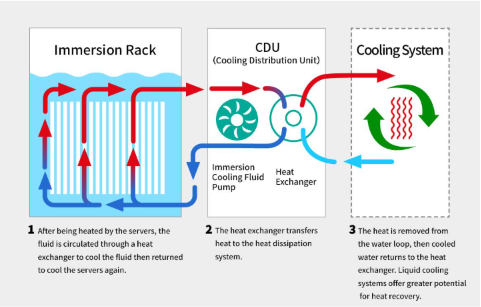
Immersion cooling takes a completely different approach. Instead of using internal fans, the entire server is submerged in a dielectric liquid that absorbs heat directly without conducting electricity.
The infrastructure also looks different. Rather than vertical server racks, systems are placed inside horizontal tanks filled with cooling fluid.
There are two common immersion methods:
- Single-phase immersion, where the fluid remains liquid and circulates through external cooling loops.
- Two-phase immersion, where the fluid boils as it absorbs heat, then condenses and returns to liquid form.
Technicians working with these systems focus more on pump maintenance, fluid quality, and tank sealing than on airflow management.
Why Fluid Mechanics Matters in Liquid Cooling Data Center Operations
As data centers adopt liquid cooling data center systems, the role of technicians is changing as well.
They are no longer only responsible for electrical systems or HVAC operations. They now need to understand how fluids behave inside closed-loop cooling systems.
Several core concepts from Fluid Mechanics are becoming increasingly important.
1. Calculating Coolant Flow Rate
Technicians need to determine how much coolant must circulate to remove heat from high-density server racks.
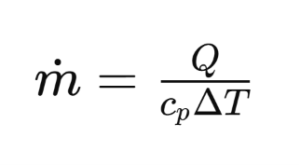
This formula helps calculate the required mass flow rate based on server heat output.
2. Calculating Pressure Drop
As fluid moves through narrow pipes and complex loops, resistance builds up.
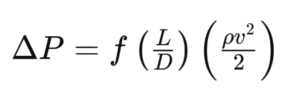
This allows technicians to estimate how much pressure the pump must overcome to keep coolant circulating properly.
3. Monitoring Reynolds Number
Efficient heat transfer often requires turbulent flow rather than laminar flow.
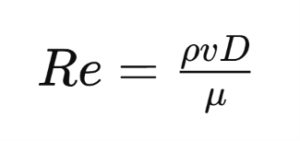
This helps technicians evaluate whether the coolant flow is optimized for thermal transfer without creating excessive vibration.
Liquid Cooling Data Center Is Changing Workforce Requirements
This shift in cooling technology is also changing hiring priorities.
A few years ago, most data center technicians primarily focused on UPS systems, electrical distribution, and general hardware maintenance. Today, many modern facilities are looking for professionals who understand thermal systems, energy efficiency, and liquid cooling data center infrastructure.
That means knowledge of Fluid Mechanics is becoming a core skill rather than a niche specialization.
Conclusion: Preparing for Careers in the AI Era
AI is not only introducing new technologies. It is also redefining the skills required behind the infrastructure that supports them.
As AI-driven data centers continue to expand, the most valuable professionals will be those who adapt early to emerging industry standards.
If you are interested in developing these skills, you can start exploring future-ready digital infrastructure technologies through certification and training programs at Nusantara Data Center Academy.


