
Batam is increasingly gaining attention as one of the strategic locations for data center development in Indonesia. Its proximity to Singapore, international connectivity, and support from special economic zones make Batam a promising location to accommodate the growth of cloud and AI infrastructure in Southeast Asia.
As computing demand continues to rise, many operators are beginning to view Batam’s data center market as a major opportunity. However, behind this rapid growth lies an increasingly important issue: how cooling systems should be designed in a city where clean water supply heavily depends on rain-fed reservoirs.
Why Batam Data Centers Are Gaining Attention in Southeast Asia
Batam has a unique geographical position. The island is located very close to Singapore, one of the largest digital hubs in the Asia-Pacific region. This proximity makes Batam attractive for regional operators seeking to build new facilities while maintaining low latency for regional markets.
Beyond location, Batam also has infrastructure that supports digital investment. According to BP Batam, the city is connected to multiple international fiber-optic submarine cables and hosts several industrial zones that support technology infrastructure expansion.
This has driven the emergence of several new projects, including the hyperscale campus being developed by NeutraDC together with Nxera in Kabil.
The Regional Growth Potential of Batam Data Centers
The growth of Batam’s data center sector reflects the city’s evolving role. While Batam was previously known mainly as a manufacturing and logistics hub, it is now increasingly recognized as part of Southeast Asia’s digital supply chain.
Several factors support this growth:
- Proximity to Singapore
- Availability of large-scale industrial land
- Access to international submarine cable networks
- Support from special economic zones
- Rapidly increasing demand for cloud and AI services
For hyperscale operators, Batam presents an attractive option because it offers a strategic location combined with relatively lower development costs compared to major markets such as Singapore.
Water Supply Challenges for Batam Data Centers
Despite its potential, Batam faces significant geographical challenges.
According to official data from BP Batam, clean water supply on the island is managed through six major reservoirs, including Duriangkang, Sei Ladi, Mukakuning, Piayu, Sei Harapan, and Nongsa. Current water production is approximately 3,487 liters per second for residential, industrial, and public service needs.
This means Batam does not rely on major rivers or large groundwater sources like many other cities. Its water system depends heavily on rainfall and reservoir management.
This becomes particularly relevant because modern data centers require stable water-related utilities to support cooling operations.
Why Do Data Center Cooling Systems Require Large Amounts of Water?
Servers inside a data center operate continuously, 24 hours a day. While processing data, especially for cloud and AI workloads, the equipment generates significant heat.
If this heat is not effectively managed:
- server performance declines
- energy efficiency decreases
- downtime risk increases
That is why cooling systems are a critical component of data center operations.
Modern cooling systems may use a combination of:
- air-based cooling
- chilled water systems
- liquid cooling
- direct-to-chip cooling
The larger the facility capacity, the greater the need for efficient cooling design.
WUE in Data Centers: Why Water Efficiency Matters
In the development of Batam’s data center ecosystem, one increasingly important metric is Water Usage Effectiveness (WUE).
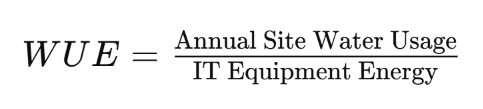
WUE measures how much water is used relative to the energy consumed by IT equipment.
The lower the WUE, the more efficient the facility.
In practice, WUE helps operators understand:
- how much water is consumed for cooling
- whether the facility relies too heavily on public clean water supply
- how cooling design can be optimized
For regions like Batam, WUE is becoming a crucial indicator because data center expansion must consider environmental carrying capacity.
Why Batam Data Centers Are Gaining Attention in Southeast Asia
The topic of water conservation in data centers is becoming increasingly important. The growth of AI-ready facilities drives higher computing capacity, which means more heat generation and more complex cooling demands.
Several strategies relevant to Batam include:
Closed-loop Cooling
This system circulates water within a closed loop, reducing water loss due to evaporation.
Advantages:
- more water-efficient
- more stable
- suitable for areas with limited supply
Liquid Cooling
Liquid cooling is widely used for AI workloads because it can remove heat directly from server components.
Advantages:
- high thermal efficiency
- suitable for GPU servers
- reduces dependence on traditional HVAC systems
Recycled Water Systems
Some global facilities are beginning to use treated industrial water for cooling.
This approach:
- reduces clean water consumption
- improves sustainability
- supports green infrastructure targets
Desalination
As a coastal city, Batam also has potential to utilize seawater desalination. However, this technology still requires higher capital investment compared to conventional industrial water supply systems.
What Does This Mean for Indonesia’s Data Center Talent?
The growth of Batam’s data center sector not only creates investment opportunities but also reshapes workforce competency needs.
Today’s data center engineers need to understand more than basic operations.
Skills that are becoming increasingly relevant include:
- power infrastructure
- UPS systems
- cooling architecture
- WUE analysis
- sustainability operations
- water conservation
- facility compliance
This means the industry challenge is shifting. Engineers are no longer only responsible for keeping servers online, but also for understanding how facilities operate efficiently within local resource constraints.
Why This Issue Matters for the Future
The growth of AI, cloud, and edge computing will continue to increase the demand for digital facilities across Indonesia. Batam has strong potential to become one of the country’s key growth hubs.
However, the future of Batam’s data center industry will increasingly depend on how operators address environmental challenges, including water availability.
In the future, data center design will not only be assessed based on:
- MW capacity
- number of racks
- uptime
- connectivity
But also based on:
- energy efficiency
- water efficiency
- sustainability readiness
- adaptability to local climate conditions
Conclusion
Batam has strong potential as a new data center hub in Indonesia. Its proximity to Singapore, supporting infrastructure, and digital market growth make it highly attractive to regional operators.
However, Batam’s data centers also face a real challenge: high cooling demands in a region where water supply depends heavily on rain-fed reservoirs.
As a result, issues such as cooling system design, WUE, and water conservation will become essential parts of modern facility planning in Indonesia.
For the industry, this is not merely about building server facilities. It is about developing digital infrastructure that remains efficient, sustainable, and aligned with local geographical realities.


