
Indonesia’s data center industry stands at a critical crossroads. On one side, the demand for digital services is skyrocketing, fueled by nationwide digital transformation, the rapid expansion of cloud adoption, the rise of artificial intelligence (AI), and the upcoming 5G rollout. On the other side, the massive energy consumption required to power this growth poses significant sustainability and environmental challenges.
This was the central theme of the Clean Energy Podcast, part of the Indonesia Conference (IC) 2023, organized by the Indonesian Society for Energy Conservation and Efficiency. The episode, hosted by Serep Oktaviani, featured a deep discussion on the standardization and transition toward Green Data Centers with two industry leaders:
- Hendra Surya Kusuma – Co-founder and Chairperson of ID Pro (Indonesia Data Center Provider Organization), Country Director of Faset Indonesia, and CEO of Data Sinergi Utama Jaya, the first Tier 3 certified data center in Indonesia.
- Gatot Prawiro – Chairperson of the Industry Working Group of Mas Key and Chief Business Development Officer of Max Power Group, with over 36 years of experience in the energy sector.
ID Pro: Strengthening Indonesia’s Data Center Foundation
ID Pro was established in June 2016 to address three major challenges in the Indonesian data center industry:
- Negative international campaigns suggesting Indonesia lacked qualified data centers, discouraging the hosting of critical applications locally.
- Unverified certification claims by providers without independent audits, creating market distrust.
- Government misclassification of simple server rooms as professional data centers.
Through partnerships with Kominfo (Ministry of Communication and Informatics) and BSN (National Standardization Agency), ID Pro played a key role in the creation of SNI 8799, the Indonesian National Standard for data centers. This standard was later referenced in Presidential Regulation No. 95/2018 on Electronic-Based Government Systems (SPBE).
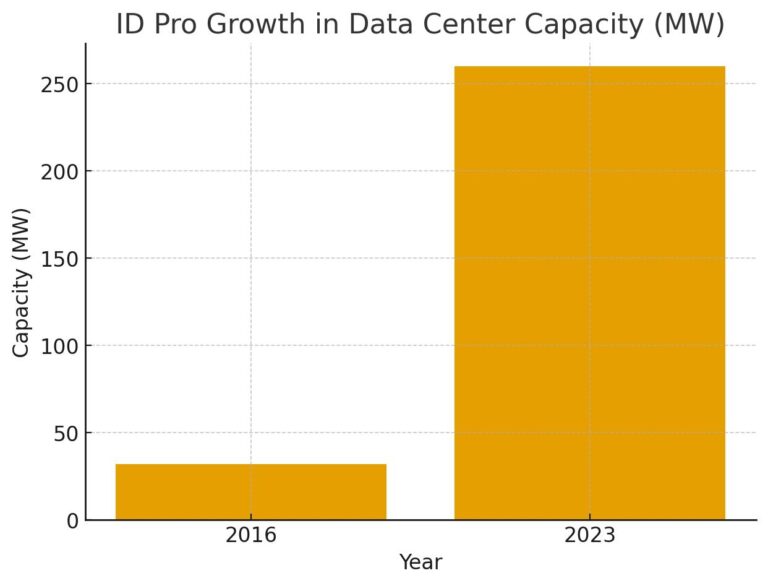
ID Pro’s growth has been significant:
- 2016: 6 members with ~32 MW capacity.
- 2023: over 260 MW capacity, projected to reach 300 MW soon.
The association is now working on a Green Data Center White Paper, which could evolve into a new national standard.
Mas Key: Efficiency as the “First Fuel”
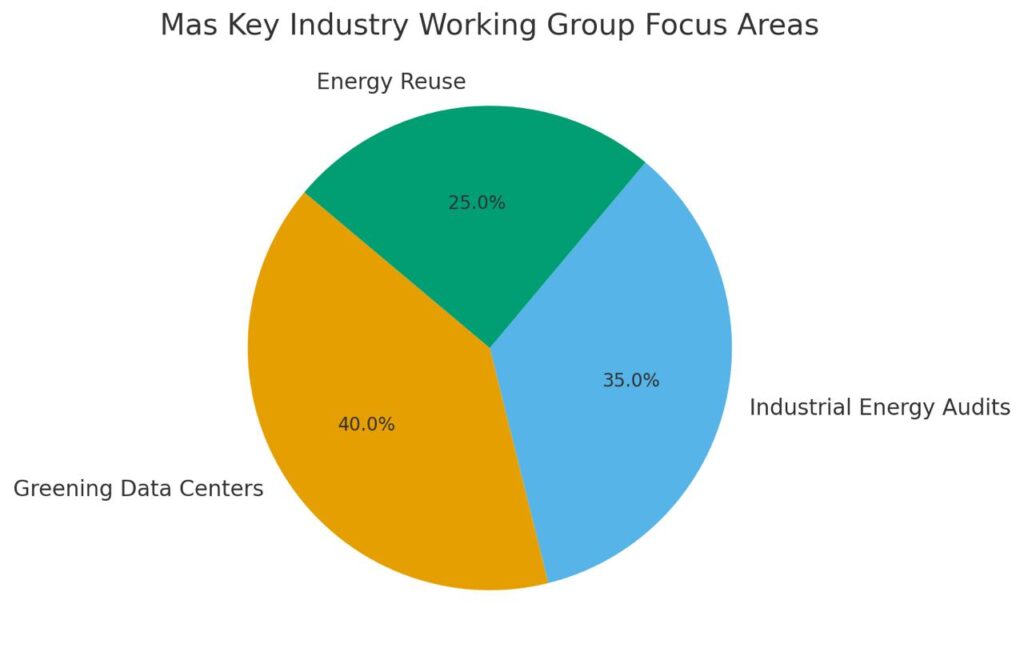
Meanwhile, Mas Key plays an important role in driving energy efficiency across industries. According to Gatot Prawiro, the guiding principle is simple: “Efficiency is the first fuel.” Every kilowatt saved is as valuable as a kilowatt produced.
Mas Key’s initiatives focus on:
- Greening data centers, especially optimizing power and cooling systems.
- Industrial energy audits to identify and eliminate inefficiencies.
- Energy reuse, such as converting exhaust heat into steam for paper production, or turning waste heat into cooling energy.
Gatot emphasized that sustainability is not a cost burden but a business opportunity. As he put it: “Green is green.”
Energy Consumption Trends and Future Projections
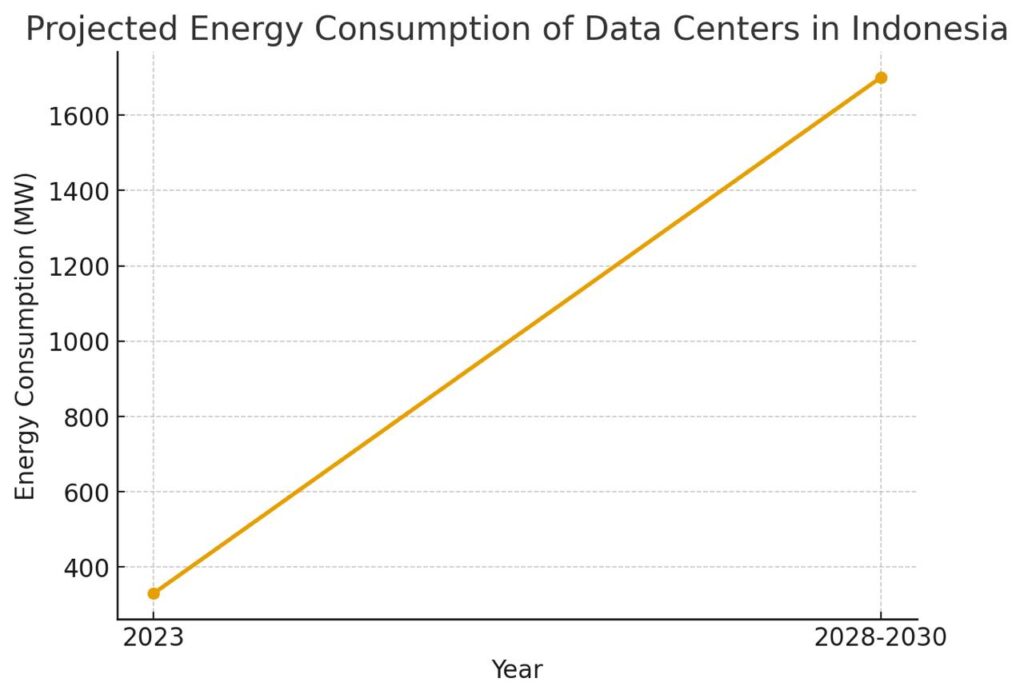
Indonesia’s current data center capacity is estimated at:
- 260 MW from ID Pro members.
- ~330 MW including global players like Amazon, Microsoft, and Google.
However, projections from industry experts and PLN (Indonesia’s state electricity company) suggest demand could surge to 1.7 GW (1700 MW) within 5–7 years.
Key drivers include:
- AI and Machine Learning – which can consume up to 25,000 watts per rack, far higher than the traditional average of ~2,200 watts.
- 5G deployment in 2025 – expected to accelerate data generation and cloud adoption.
This rapid growth highlights the urgency of adopting green strategies before energy demand becomes unsustainable.
Defining a Green Data Center
According to Hendra Surya Kusuma, a Green Data Center goes beyond efficiency alone. It requires balancing operational effectiveness with environmental responsibility, measured across four dimensions:
- Energy Supply – the carbon footprint of electricity sources.
- Energy Efficiency – optimized Power Usage Effectiveness (PUE).
- Water Utilization Effectiveness – efficient management of water resources.
- Environmental Impact – broader ecological consequences beyond energy and water.
He pointed to Singapore as a cautionary example, where data centers already consume 5% of national electricity capacity, forcing the government to restrict new developments until greener solutions are found.
Practical Green Strategies for Data Centers
Both experts highlighted practical steps already being explored in Indonesia:
- Targeted cooling (zone cooling) instead of cooling entire rooms.
- Allowing higher ambient temperatures in server rooms to reduce cooling demand.
- IoT-based energy monitoring, enabling transparency and real-time data.
- Purchasing green energy certificates from PLN, a growing trend among large operators.
Still, many data centers built before 2016 lack smart monitoring systems, relying on manual measurements. Awareness of carbon emissions also remains low, despite the government’s plans to introduce a carbon tax.
Industry Progress and Global Client Demands
Within ID Pro, almost all members are now engaged in sustainability discussions. Focus areas include:
- IoT and machine learning dashboards for integrated monitoring of electrical, mechanical, and cooling systems.
- Automation to reduce downtime, since 78% of outages are human-related.
- Meeting international client requirements, especially from Europe and North America, where “green compliance” is often mandatory in Requests for Proposals (RFPs).
Yet, full adoption of Green Data Center standards is still evolving. Many providers rely partly on green energy certificates to satisfy client expectations.
Energy Accounting: A New Paradigm
Gatot introduced the concept of energy accounting, comparable to financial accounting but focused on energy use. While new for many operators, it offers several benefits:
- Identifying inefficiencies and cost-saving opportunities.
- Supporting internal corporate policies.
- Providing regulators with accurate data to craft realistic policies.
Currently, most Indonesian data centers still rely heavily on coal-based power, underlining the urgent need for regulatory frameworks that enable a transition toward renewable energy.
Conclusion: The Long Road to Green Data Centers
The discussion made clear that Indonesia has the capacity for digital growth but must urgently address sustainability challenges.
Key takeaways include:
- Rapid growth: from 32 MW in 2016 to 260 MW+ in 2023.
- Energy risk: projected demand of 1.7 GW within 5–7 years.
- Green standards: a new national framework is essential beyond SNI 8799.
- Practical solutions: targeted cooling, IoT monitoring, and green energy certificates.
- Collaboration: industry-government partnership is the only way to accelerate adoption.
With clear standards, regulatory support, and industry-wide adoption of green technologies, Indonesia has the potential to become a regional leader in sustainable data center development—driving digital transformation while safeguarding environmental sustainability.
For more details, listen directly to the podcast on YouTube Nusantara Academy and don’t forget to register for training by contacting https://wa.me/6285176950083


