
In today’s interconnected world, data centers are the backbone of digital infrastructure. They hold highly sensitive information that must be protected not only through technical measures, but also by meeting legal and regulatory expectations. For data center professionals in Indonesia, “security” is not just firewalls and surveillance cameras. It is also laws, standards, and audits that force consistency, discipline, and proof. Aligning with Indonesia’s regulatory requirements and globally recognized certifications turns good practice into verifiable, repeatable controls that withstand both attacks and scrutiny.
Indonesia’s rapid digital transformation, from e-commerce and fintech to cloud adoption and digital banking, has positioned data centers as critical enablers of trust. However, this rapid growth also makes them prime targets for cyber threats. The government has responded with stricter regulations designed to ensure that sensitive data is properly safeguarded and that providers are accountable. In this landscape, compliance and certifications are not simply formalities; they are critical differentiators.
Recent global incidents underscore the stakes. High-profile data breaches, such as the Equifax breach in the U.S. or the Singtel cyberattack in Singapore, have shown how failures in compliance and inadequate security controls can lead to regulatory fines, lawsuits, and loss of public trust. For Indonesia’s growing digital economy, these examples serve as reminders of why aligning with both national regulations and international standards is vital.
Legal Compliance: The Foundation of Trust
Compliance is no longer optional; it is a legal necessity in Indonesia and beyond. For instance, Law No. 27 of 2022 on Personal Data Protection (PDP Law) requires organizations, including data centers, to implement robust safeguards for personal data and to report breaches within strict timelines. The PDP Law introduced GDPR-style obligations for controllers and processors, including the requirement to notify the regulator and affected data subjects within 72 hours of a breach being identified. Non-compliance can result in administrative sanctions and fines.
Further, Government Regulation No. 71 of 2019 on Electronic Systems and Transactions (PP 71/2019) requires Electronic System Providers (ESPs) to register, maintain audit trails, establish incident response procedures, and report serious incidents to law enforcement and the relevant ministry. Complementing this, BSSN Regulation No. 8 of 2020 sets baseline cybersecurity requirements, guiding how ESPs design policies, safeguards, and monitoring systems.
Meeting these standards often requires advanced monitoring solutions such as Security Information and Event Management (SIEM), which enable rapid detection and reporting of breaches and incidents within the mandated 72-hour window. This suggests that operating or hosting critical digital infrastructure in Indonesia requires both legal compliance and recognized security certifications to demonstrate to regulators, customers, and partners that their controls are both effective and trustworthy.
Certifications as Evidence of Security Excellence
Certifications can help elevate cybersecurity from compliance to a position of leadership. ISO/IEC 27001:2022 provides a structured Information Security Management System (ISMS), focusing on confidentiality, integrity, and availability of data; it is widely adopted across industries. For data centers, ISO/IEC 27001:2022 compliance ensures essential security processes are in place and gives clients assurance of strong cybersecurity practices.
Beyond ISO 27001, other certifications also play key roles. SOC 2 assures the effectiveness of controls, PCI DSS is essential for handling payment data, and Uptime Institute’s Tier certifications confirm the resilience and reliability of infrastructure. Together, these frameworks provide a multi-layered approach to demonstrating operational maturity.
Benefits Beyond Compliance
Certifications bring broader advantages, such as demonstrating a clear commitment to security, enhancing brand reputation, and strengthening stakeholder trust; boosting competitiveness, as ISO/IEC 27001:2022 certified organizations can win deals faster and attract larger clients with reduced friction; and building internal operational efficiency, strengthening security culture, and improving incident prevention.
These benefits extend beyond audits. Many enterprises now require their partners and service providers to maintain certifications as a condition of doing business. In this way, certifications become strategic assets that open doors to new opportunities.
Industry Trends in Indonesia
The Indonesian data center market is expanding rapidly, with global players investing heavily in it. These operators consistently highlight their compliance with both national regulations and international certifications as part of their value proposition. For customers, certifications serve as a shorthand for trustworthiness, helping them make informed choices in a competitive landscape.
There is also a shift from ‘checkbox compliance’ to continuous assurance. Instead of viewing compliance as a one-time exercise, forward-looking organizations are adopting ongoing monitoring and auditing practices. This shift reflects a broader trend in cybersecurity: resilience is not a destination, but a continuous journey.
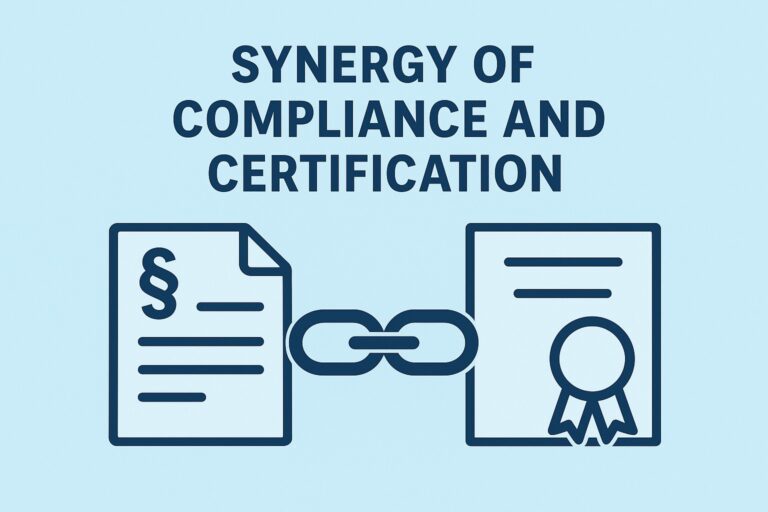
Synergy of Compliance and Certification
Legal compliance and certifications work hand-in-hand. Research shows organizations integrating ISO/IEC 27001:2022 with the PDP Law can create robust frameworks that satisfy both regulatory and international best-practice standards. While the PDP Law demands specific legal requirements (e.g., consent, breach notification), ISO/IEC 27001:2022 supports those through systematic risk management and continuous improvement.
Building Talent for a Secure Ecosystem
Another important aspect of compliance and certifications is the demand they create for skilled professionals. Data centers increasingly require compliance officers, auditors, and ISMS managers who understand both regulatory obligations and technical frameworks. This demand contributes to talent capacity building in Indonesia’s digital infrastructure sector and opens opportunities for professionals looking to specialize in cybersecurity and compliance.
Conclusion
Compliance provides a baseline for legal and regulatory safety. Certifications such as ISO/IEC 27001:2022 build on that baseline, turning it into a strategic advantage that demonstrates resilience and builds trust. When combined, they empower data centers to lead in cybersecurity while aligning with regulations. For Indonesia’s growing digital economy, this synergy ensures that critical infrastructure remains both secure and trustworthy.
For more details, listen directly to the podcast on YouTube Nusantara Academy and don’t forget to register for training by contacting https://wa.me/6285176950083


